Best Possible Details Shared About Nist Ial3 Verification
In order to meet IAL3 requirements, the relying party must verify that a person present either in-person or remotely by using video streaming, facial recognition with liveness detection and document authentication - this ensures that their claimed identity is authentic rather than stolen or fake.
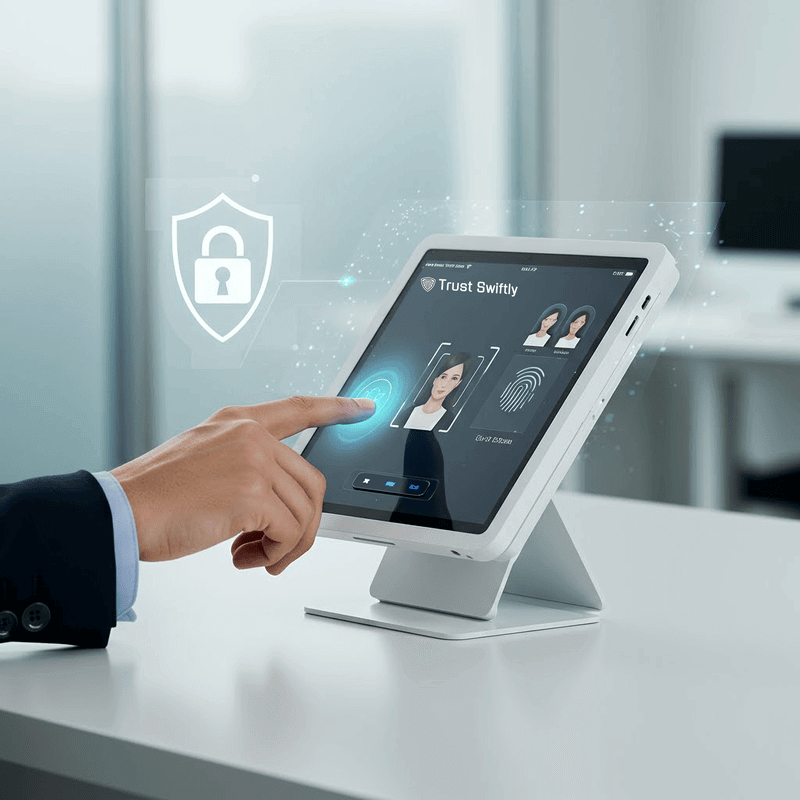
Federal practices and sprawling contractor networks that employ remote IT worker threat models posed by DPRK requires an uncompromising paradigm shift toward hardware-anchored identity authentication like IAL3 for full compliance and future-proof identity management. A modern identity platform supporting this mandate is key for compliance as well as future proof identity management.


While NIST 800-63-4 maintains its three-tier framework of Identity Access Level (IAL), Authorized Application Layer (AAL), and Federal Access Layer (FAL), modern identity platforms support this mandate with adaptive, risk-aware verification processes.
Verification
NIST 800-63-4 revision four provides a more structured DIRM process that takes broader organizational risks into account, including impacts on mission delivery and individual users (including equity and privacy issues). Furthermore, it raises requirements for assurance levels to better align with transaction sensitivity and threat profiles; specifically it strongly endorses phishing-resistant MFA (AAL2 and AAL3) while formalizing integration of FIDO passkey technology into this standardization.
Identity fedramp high identity proofing involves on-site or remote video monitoring with high-resolution facial recognition technology and liveness detection capabilities to verify and secure biometrics and documents that have been enrolled with them. As it's more expensive and time consuming, two-factor authentication should only be utilized in environments posing the highest risks - such as healthcare services, government applications or financial transactions that involve highly sensitive transactions. TrustSwiftly helps organizations meet IAL3 guidelines with a secure, user-friendly FIDO Certified solution that combines document, facial recognition, liveness detection and cryptographic identity proofing to increase phishing resistance and man-in-the-middle protection.
Compliance
NIST Special Publication 800-63 is an indispensable standard that defines how organizations verify identities, authenticate users, and exchange identity data safely. Unfortunately, its implementation can be challenging and time-consuming for many outside the identity industry.
NIST SP 800-63-4 streamlines digital identity management by providing an easily understandable modular framework of Identity Assurance Level (IAL), Authenticator Assurance Level (AAL) and Federation Assurance Level (FAL). Organizations can select an IAL that best meets their risk management needs while taking advantage of AAL levels to ensure authentication processes meet stricter criteria.
These guidelines also establish phishing-resistant MFA and user-controlled wallets such as FIDO Passkeys (device-bound and syncable) as new baselines for AAL1. FALs are further strengthened by mandating cryptographic binding for federated transactions as well as officially integrating subscriber-controlled wallets into AAL2 and FAL3. NIST's updates reflect its response to real world threats like phishing while encouraging modern verification practices and advocating the use of cryptographic authenticators.
Fedramp
NIST 800-63-4 IAL3 Identity Proofing provides the highest level of identity proofing that can be used to safeguard critical business processes. The framework offers more secure ways of verifying a person's claimed identity, as well as requires in-person meetings for nist ial3 verification purposes. Trust Swiftly's passwordless authentication solution meets these standards, providing businesses with increased levels of protection through remote yet supervised IAL3 Identity Proofing.
Contrary to earlier versions, version four of the framework maintains its tripartite structure of IAL, AAL and FAL while updating requirements for modern security technologies such as FIDO passkeys and federated identities. Furthermore, more granular assurance levels allow you to select an identity proofing solution suitable to your business requirements.
TrustSwiftly helps organizations meet nist 800-63-4 ial3 compliance with its no-code kiosks and no-code mobile apps, which allow a user to connect live with an agent. TrustSwiftly supports various methods such as document verification, video streaming and facial recognition with liveness detection for connecting live with agents; step-up reproofing according to risk can further help reduce cyber liability insurance costs.
High Identity Proofing
Trustswiftly digital ial3 identity verification software offers organizations an efficient means to meet this growing trend while meeting compliance regulations for identity verification, such as NIST 800-63. Trustswiftly allows companies to select an assurance level which best meets their security and usability needs for each use case, offering complete customization with its high degree of usability and security features.
At its highest assurance level, IAL3, biometric data comparison involves using video and facial recognition technology with liveness detection technology to compare biometrics of an individual with images from strong identity evidence such as video or photographs from strong identity documents, using video recognition and liveness detection technology. CSPs must record physical comparisons between enrollees and identification documents and has restrictions against spoofing attacks such as wearing realistic silicone masks.
IAL3 supports federated identity, wherein CSPs securely send assertions of real-world identities of people using digital services to those responsible. This reduces costs, improves usability and enhances security by eliminating redundant user verification at each relying party.
What's Your Reaction?